
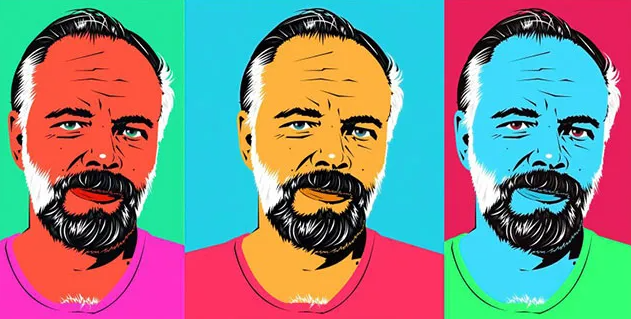
A human brain-controlled spacecraft would mean mechanical perfection. This was accomplished, and something unforeseen: a strange entity called—Mr. Spaceship
Mr. Spaceship was first published in 1953 in Imagination, Stories of Science and Fantasy Magazine, and later in The Collected Stories of Philip K. Dick. If you would like to read the short story, it’s available for free on the Project Gutenberg website. Please click on the link below.
Mr. Spaceship, 1953. Philip K. Dick.

It’s the future and Terra is still at war, only this time it’s with the Yucconae aka the Yuks, an alien life from another planet. The Yuks are winning, because they are using technology that is superior to the mechanical spaceships used on Terra. Their spaceships are biological and can think for themselves, leaving humanity struggling to find a solution, until now. Philip Kramer is part of a research team that develops a plan to build a spaceship that’s powered by a human brain, but his wife Dolores is the one who thinks of the ideal candidate. Professor Michael Thomas taught Philip and Dolores when they were younger, but now he is older and dying. After hearing Kramer’s plan, the Professor donates his brain to the cause. The project is complete and everything is going perfectly until Kramer learns that the Professor has made some changes to his plans. And those changes become rather significant, as the Professor can now control the entire ship. Kramer and his team become fearful and manage to escape the vessel before it leaves for outer space. Kramer is informed that his wife has been involved in an accident and he leaves to go see her. It turns out, the accident is a ruse by the Professor and Kramer is kidnapped. The Professor had his own plan all along and wants to take Kramer and Dolores to a new planet. To start a new civilisation, one that doesn’t desire war.

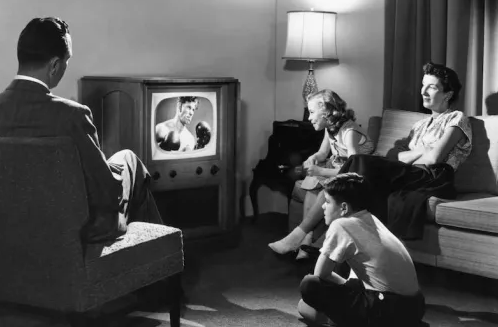
As soon as I read Mr. Spaceship, I was taken to a world I had almost forgotten. Okay, I wasn’t around in the fifties when the story was first written but, I was around before the digital revolution when television was black and white and that’s the environment my imagination created when reading it. This story could have been sponsored by Benson and Hedges with the number of cigarettes that were smoked, and it was funny to remember a time when this was classed as elegance. I did enjoy revisiting that era though and it took me back to those early morning black and white matinees that first introduced me to science fiction, but?
“A lot of this was still mechanical, worked by pressure, temperature, stress. Now it’s under the central master.” “The brain?” Gross said. “You mean it’s been altered so that the brain manipulates it?”
I think the story has suffered the passing of time with some of its chauvinistic views. I’m certainly not blaming Philip K. Dick for this and your interpretation could be far different from mine, but Dolores should have been the most important character in the story but she’s brushed aside with ease. In my eyes, she came up with the idea to contact the Professor and it would have been more realistic if she was the central character, only because she seems more caring than Kramer. I mean, there could have been a lot more depth to her character in making Kramer believe that war is pointless. I feel a modern-day Dolores would have more of a voice in the story. The fact that the Professor decides to discuss his plans with Kramer while Dolores is left sitting in the luggage department speaks volumes. Not exactly the all-seeing eye I want looking over me, thank you.
“Where are we going?” He smiled at his wife, standing nervous and frightened, her large eyes full of alarm. “I don’t know where we are going,” he said. “But somehow that doesn’t seem too important right now…. I’m beginning to see the Professor’s point, it’s the result that counts.”
But then again, I could be wrong. Maybe, Philip K. Dick is pointing this out to me on purpose and he is aware of this situation. If true, what a wonderful and unique way to do it. I should talk about the Yuks, and I was expecting more interaction with them. I guess you can only fit so much into the story, but I was craving a bit more information about them. I did like the idea of Mr. Spaceship, and some of the imagery used was spectacular. After reading Mr. Spaceship quite a few times, I’m left wondering, what is the moral of the story? I could look closely at the Professor who is pretty reminiscent of those who have survived the turmoil of war. The only problem is that his actions are not something I agree with so he didn’t resonate with me. Kramer didn’t seem like the man who could lead a new society into a peaceful existence either. I guess that only leaves one answer.
However, this is my first step into the short stories of Philip K. Dick. Hopefully, as I continue to make my way through each story, I can start to understand his writings more in-depth. However, it is a start, and that is the only place you can begin any journey.
Thank you for visiting today, it really is appreciated. If you enjoyed this review, please leave me a like or comment below. Also, if you would like to follow my journey on this site, please subscribe for future posts.
The Philip K. Dick Vault.
My Projects.
Make a one-time donation
Make a monthly donation
Make a yearly donation
Choose an amount
Or enter a custom amount
Your contribution is appreciated.
Your contribution is appreciated.
Your contribution is appreciated.
 Perhaps One Did Not Want To Be Loved So Much As To Be Understood.