

Akira 1988 is a Japanese animated film that I have always been curious about, but I have somehow managed to miss it until now. Actually, it has been a year or so since I first watched the film, but I find that the story is pulling me back. However, it is only recently that I think I have discovered why. Okay, I know I am a little late to the party, but better late than never, I suppose. In many ways, Akira would have hit me a little harder at a younger age, if only to please my rebellious and somewhat punk attitude around that time. Bands like The Sex Pistols helped shape my ethos on life, and everything that comes with it. Alternatively, Akira has come at the perfect time, if only to remind me that those early reflections on life are worth fighting for. Japanese culture is a completely different landscape from the leafy suburbs of rural England that I have spent my life absorbed in. However, the story remains the same, and the feeling of distrust and fear for the future is something we all share, regardless of location. I am also aware that Akira has a strong following, and this story has been spoken about many times before, and in many ways, I am just a guest in this beautiful creation. However, I also want to document my own feelings as a newcomer to this epic achievement in animation. It is also important for me to try to find out how Katsuhiro Otomo captured my imagination and kept me wanting more.

I often wonder what is pulling me towards anime in later life? It may be my admiration for animation and my curiosity to understand its impact on modern culture. I suppose this first started with Hong Kong Phooey and The Wacky Races. I don’t remember much about those cartoons in terms of storytelling, but the cloudburst of bold colours that poured all over my cerebellum still splashes around in my imagination today. In my teenage years, The Lord of the Rings animated movie suddenly made me realise how meaningful and powerful this medium could be. However, Watership Down and The Brave Little Toaster taught me some life lessons that still reside with me to this day. It is easy to say that I am not the only one, and animated movies have been shaping the futures of young minds for a long time. The movies mentioned above are only a handful of titles that I remember easily, and there are too many to mention when I look back on the past. When the Wind Blows is a film I have been thinking about a lot recently, and I need to watch that again soon. In other words, I’m beginning to realise how much animation has had an effect on me as a human being, without being fully aware of it. On this very site, I have reviewed The Beatles’ Yellow Submarine, Starchaser, The Legend of Orion and The Animatrix. So, in answer to my own question, what is pulling me toward anime in later life? I would say this journey first started when my life had barely begun.
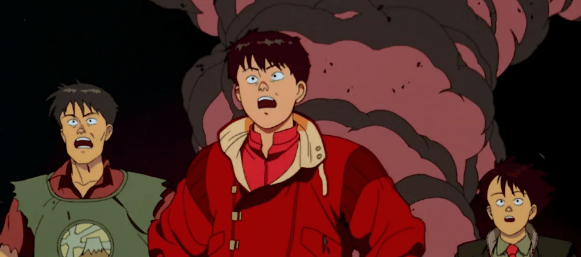
The Japanese seem to lead the way in respecting and understanding the lasting impact of animation, and Akira is one of those beautiful creations that shines a light on that cause. I never write these reviews as an expert, and I am just curious about the world and the creativity that comes with it. Each character is rich in storytelling, and each background story is worth investigating further. I do not have the answers to these questions, but for my personal pleasure, I will be reading the manga in the future. However, there are some things I do find fascinating, and here are my thoughts. I love science fiction, and the future aesthetics of modern Tokyo are beautiful. I can see how the neon landscape, motorcycle gangs and punk attitude are appealing to a younger generation. The punk attitude craved by many in the late seventies is instantly available in this dystopian landscape. Free to ride, fight and free from the constraints of a society that expects so much from us. However, I now find something more appealing amongst the concrete monoliths, something that has only really resonated with me in later life. Personally, Akira is a stark reminder of how technological advances in society leave me with a sense of anxiety in my own surroundings. I found the inner cities to be claustrophobic, the steel structures intimidating, and technology suffocating. However, Katsuhiro Otomo made me believe I am not the only one.

As of writing this, the story of Akira still feels pretty confusing at the moment, and I know that reading the manga will help fill in a lot of the backstory. How was Akira responsible for Tokyo’s destruction? How and why are Shikishima and Doctor Onishi involved in the psychic abilities of the children, and I would love to learn more about the childhoods of Kaneda and Tetsuo. Somehow, Akira feels like the greatest hits of something far greater and complex in structure, and now I want to learn more. In contrast, the soundtrack to Akira is organic and a reminder of the simplicity of life. However, it was only during my second viewing that I realised the importance of this music. Here we have a world that is vast in corruption, terrorism and gang violence, but that is not punk. I used to believe that punk was about anger and repression, but it was always about freedom. I have always loved music, and a great soundtrack is always pleasing to me. The Original Soundtrack was recorded by Geinoh Yamashirogumi, composed and conducted by Shoji Yamashiro and features Indonesian gamelan music and Japanese noh music. The taiko drums, shakuhachi flutes and synthesizers are about creativity and freedom to create something bold. In many ways, the music of Akira makes you feel like the universe is speaking to you directly. It elevates the story to another level and makes you believe there is something far more beautiful to discover in this society. The power of the universe is what matters most, and the universal truth is not to be seen, only to be heard.

In conclusion, I know I have barely made a scratch on the importance of Akira, but it is also a question of, where do you stop? My thoughts on the film are reminiscent of the final fight between Kaneda and Tetsuo. The amalgamation of flesh, steel and concrete fighting each other for dominance. The film is quite simply a masterpiece, and deserves that title. It is a story that looks deeper into society that I am not sure I fully understand yet, or I don’t want to admit to fully understanding without doing more. However, it is a story about friendships and the challenges we face in modern life. It is also wonderfully creative. The hallucination scenes are the most visually striking and thought-provoking images I have seen on a screen ever. The city of Neo-Tokyo is worthless; it’s a hindrance, and the determination to protect it has lost its cause. The citizens are more important than its basic structure, and the story portrays that perfectly. I always feel a little worried about writing about something so beloved, because it means so much to so many people. However, it is a film that I feel is worth talking about, and I now understand why it gets so much love from other people. I may not have all the answers yet, but it’s a start. I only wish I hadn’t waited so long to watch it in the first place. I guess It’s time to get reading.

Thank you for visiting today, it really is appreciated. If you enjoyed this review, please leave me a like or comment below. Also, if you would like to follow my journey on this site, please subscribe for future posts.
My Projects.
Make a one-time donation
Make a monthly donation
Make a yearly donation
Choose an amount
Or enter a custom amount
Your contribution is appreciated.
Your contribution is appreciated.
Your contribution is appreciated.

