
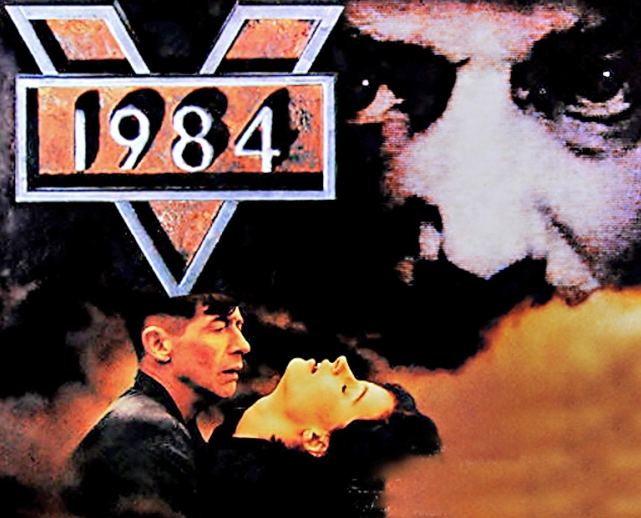
Hello and welcome back to My Journey into Science Fiction Part 24. Nineteen Eighty-Four is a British dystopian science fiction film, written and directed by Michael Radford, based on George Orwell’s 1949 novel of the same name. Having recently read and listened to Nineteen Eighty-Four, I had high expectations for Michael Radford’s film adaptation. The book has given me great enjoyment over the last month or so, and this is a film that I have waited to watch for a long time. By the way, the recent Orwell Collection by Audible featuring Stephen Fry is simply breathtaking. Fry’s portrayal of O’Brien will haunt me forever.
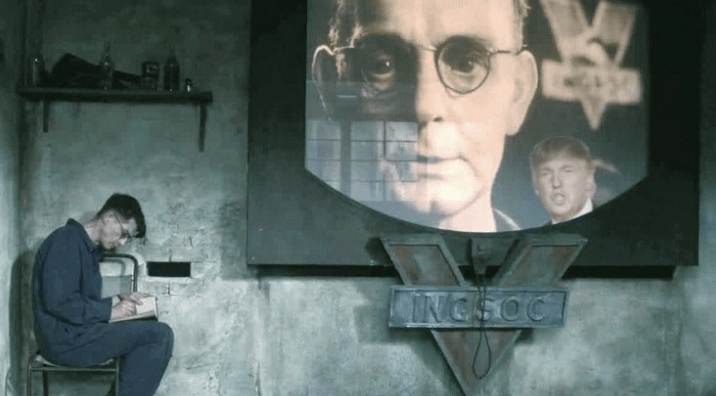
I started with Nineteen Eighty-Four when I was pretty young, but for some reason, I never finished reading it. However, those first couple of chapters stayed with me forever. After finally completing the book, the world Winston Smith lives in felt as real as the bed I sleep in every night. Michael Radford somehow managed to recreate those images that are now etched into my brain, onto the screen in a powerful way. He also manages to highlight the moments of the story that resonated with me. I can understand the attraction of a story like Nineteen Eighty-Four, and the slogan Big Brother is Watching You. Some people already feel like we are already living in this World. However, I am not attracted to The Ministry of Truth, the Thought Police, or the Inner and Outer Party. It’s depressing, cold and miserable. I understand why it exists in the story, and George Orwell’s warnings from the past are important., But I did take something away from this book that is a lot more significant, and the film makes me appreciate that meaning even more.
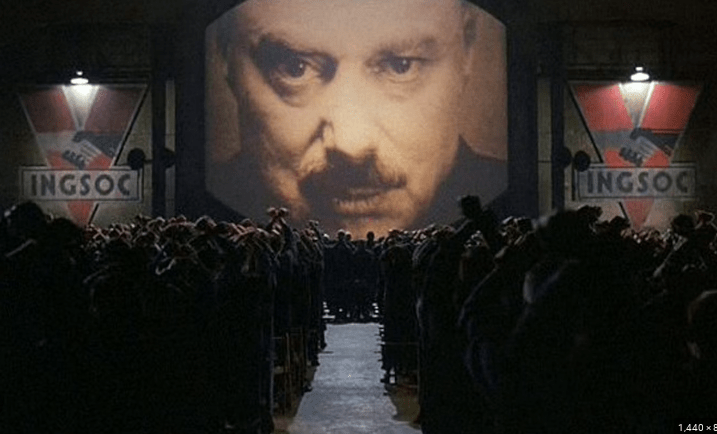
Nineteen Eighty-Four is a story about the needs of humanity, the appreciation of life, and the destructive side of our nature. Michael Radford delivers the negatives, but he doesn’t get caught up in the politics of the story. John Hurt Winston Smith, delivers this contrast beautifully, and his range of emotions throughout the film is a master class in acting. His transformation from a stone-faced clone working in his tiny office cubicle in the Ministry of Truth to a tortured individual fighting for his hatred of Big Brother is some of the finest acting I have ever witnessed. Winston embarks on an affair with an Outer Party worker, Julia Suzanna Hamilton, and this is when the years of emotional suppression leave his soul. For this brief moment in time, Winston is alive. The simplicity of having your own space, enjoying real coffee and tasting the small things in life is not to be taken lightly. This space also gives Winston time to grieve, revealing the pain that haunts him, after leaving his mother and sister for a small piece of chocolate. The chocolate may be small, but the repercussions are significant and powerful moments the film explores perfectly.
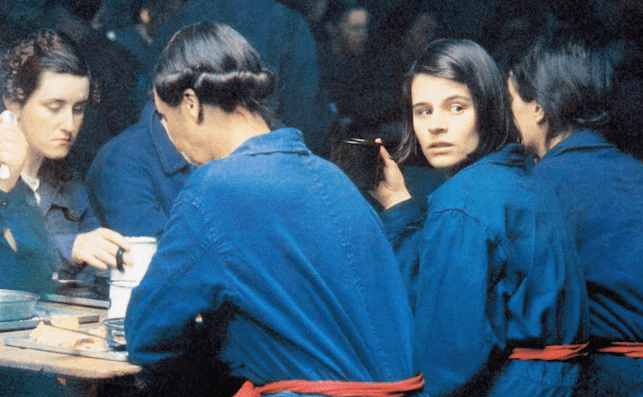
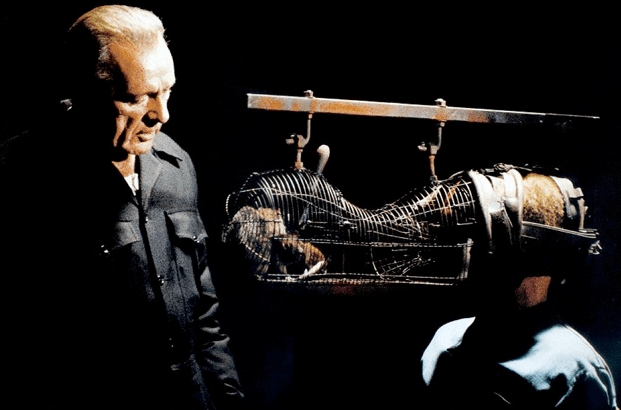
Winston might have taken comfort in Julia, but his intuition fails him when he visits O’Brien Richard Burton, a high-ranking member of the Inner Party. It’s Winston’s relationship with O’Brien that makes this film work for me. I believe O’Brien thinks he is helping Winston with his rehabilitation, which intrigues me. Richard Burton brings so much compassion to his character, that I began to believe that loving Big Brother could be a good thing. Burton asked that his boiler suit be made at Savile Row, and somehow that gesture adds some authenticity to the film. Surely, loving the Supreme Leader has its privileges, and O’Brien believes that Winston could eventually become a member of the Inner Party. I could be wrong and someone reading this could be saying, that’s not how it works. I guess that is why this book is so popular, only because it’s so hard to work out and evaluate easily. However, it’s Burton’s portrayal of the character that could make me believe that 2 + 2 = 5. It’s strange saying those things about O’Brien because the torture of Winston is brutal. However, Winston does put up a good fight against his persecutor. He hates Big Brother, The Party and all its crazy ideologies. However, in Room 101, he will face his darkest fears. Room 101 is a place where your phobias will haunt you. And, for Winston, it’s rats. The cage that is attached to Winston’s head is terrifying. I had a vision for that device, but it wasn’t as shocking as the one in the film. The device is truly frightening, and at the same time, hypnotic. The rats finally break Winston, now he loves Big Brother and screams for them to torture Julia instead. The conversion is complete.
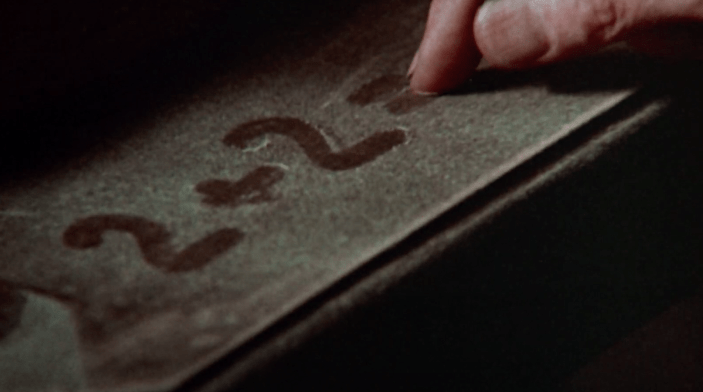
Michael Radford made a slight change at the end of the film, which I admire. I love the end of the novel but this interpretation gave me hope. Winston sits in a cafe, listening to reports of victory in North Africa on the telescreen. Julia notices him and comes inside, they share a few words, and it is clear that she now belongs to the Party. After Julia leaves in the novel, Winston accepts that he loves Big Brother. However, in the film, he says “I Love You”. I guess it is down to the viewer to make up their own mind on the ending, and I like that.
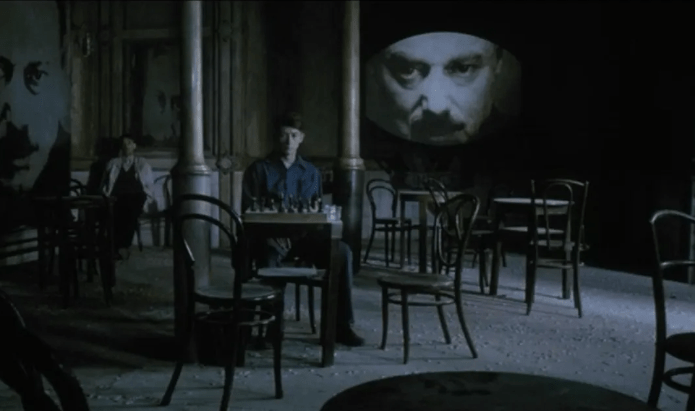
It’s interesting that the film was made in 1984, and the exact time and setting imagined by George Orwell. The sets used are visually satisfying. However, some of the exterior shots look out of time. It’s a small criticism, but I think some of the brutalist housing estates that appeared around England in the seventies would be an ideal location to tell the story. Suzanna Hamilton was like a breath of fresh air in this film, and it would have been nice to see her side of the story a little more closely. Roger Deakins is a name I should mention, as he was the cinematographer for this film, and he made a huge impact on the film’s visual delight and atmosphere. The colours used in the movie are unique, and they used a film processing technique called bleach bypass to achieve this. This process gave the negative grain a unique texture, which is beautiful and sacred. It was Richard Burton’s last film role, and what a special performance. I learnt a bit about his life, and this film has made me want to know more about his career, and a life that seemed extraordinary, and difficult at the same time.

Nineteen Eighty-Four has given me a lot of joy for the last month or so, and I am glad I took a step into this world. I understand the broader message of the story, but politics and propaganda give me a headache in the real World. I don’t enjoy the broader message, because I feel like there is a flaw in the story. It makes no sense to treat people so badly because a happy workforce is a productive one. I think there would be complete anarchy in reality, as we all have desires and needs, regardless of rank. There is also a deep sense of paranoia in this story, something I think can cripple a Country alone. However, I love the characters, and the rich tapestry that George Orwell created. All I’m trying to do is make some sense out of my own life, and learn how a story like Nineteen Eighty-Four can make me appreciate it a little bit more. I won’t be sitting at home, wondering if Big Brother is watching, I will be outside smelling the fresh air, tasting the coffee and enjoying the freedom I think Winston deserved.
So, where next in My Journey into Science-Fiction Part 25? Well, it’s pretty simple. John Hurt is the best thing about Nineteen Eighty-Four, and he is an actor that I admire. So, I will be watching him again, in Ridley Scott’s science-fiction horror classic, Alien, 1979.
Thank you for visiting today, it really is appreciated. If you enjoyed this review, please leave me a like or comment below. Also, if you would like to follow my journey on this site, please subscribe for future posts.
My Journey into Science Fiction Archives.
My Projects.
Make a one-time donation
Make a monthly donation
Make a yearly donation
Choose an amount
Or enter a custom amount
Your contribution is appreciated.
Your contribution is appreciated.
Your contribution is appreciated.

