

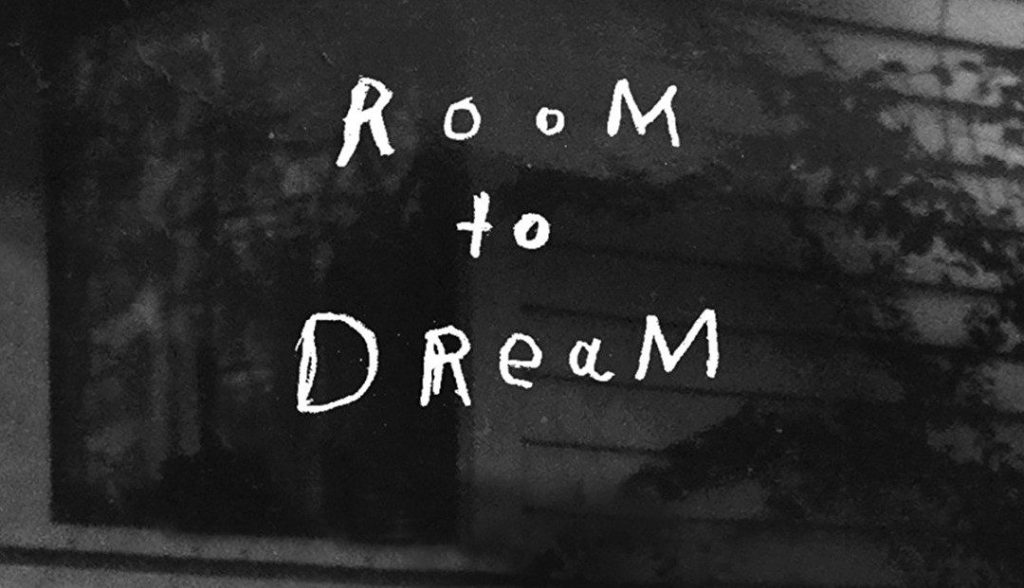
Life has a way of surprising you when you least expect it, and you just have to sit back and soak it up. I never realised in 1990 as I waited for the premiere of Twin Peaks on ChanneI 4, that I would be still thinking about one of the show’s creators for years to come. I decided to look more closely at the work of David Lynch while I was reading his biography, Room to Dream. Sadly, I was in the final chapters of the book when the news broke of his passing into another realm. I have always found his work fascinating, truthful and thought-provoking. However, I have not watched all his movies, waiting for the right moment to arrive or was it because his work always made me want to avoid taking a peek behind the curtains? Whatever the reason, David Lynch always leaves me lost for words. Lost in confusion? Enlightenment? Or the sheer admiration for the beauty he creates for our pleasure? All of the above, but being lost in something is always an emotional experience, regardless of the reason.
Unfortunately, Dune was a movie that Lynch described as a “Gigantic sadness in his life, due to lack of creative freedom.” So, it feels right to begin with Frank Herbert’s science-fiction epic. The main reason David Lynch made his way back into my life was while I watched Denis Villeneuve’s Dune. I do enjoy and appreciate the latest movies by Villeneuve, but the contrast between his version of Dune and Lynch’s finally made me understand just how much his work affected my own taste for the macabre, and no matter how far visual effects have come, nothing can ever beat Paul Atreides Kyle MacLachlan riding a sand-worm as an electric guitar solo screams into life. Lynch’s Dune leans further into the darkness, exposing the evil that relishes in watching the world burn. Fear is the mind-killer, and I can only imagine what film we might have received if David Lynch had been given the freedom he deserved, without the stress of a Hollywood studio peering over his shoulder.
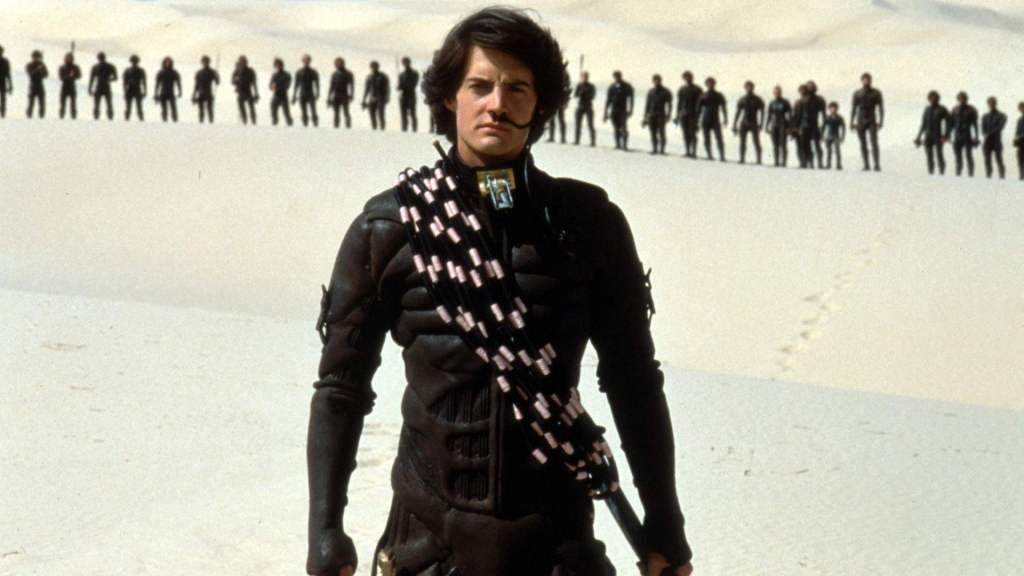
However, Dune is a story that seems lost on screen somehow, and I am not sure why. I admit this is a bold claim for someone who has not read the books. I have read A Masterpiece in Disarray by Max Every to try and understand the film better, and I quickly realised that Dune was always going to be bigger than David Lynch. I do not mean that in a way to discredit his talent, but the making of the movie was a project that was years ahead of its time and also required a lot of other individual talent to bring it to life. Perfect for a director for hire, but for a true visionary like David Lynch, the whole setup must have felt suffocating, but more of that later. The truth is, Dune also left me feeling confused, and I could barely make it through the two-hour and twenty-minute runtime. Thankfully, I now realise that the production was flawed, the editing was compromised and the importance of the studio getting their money back overshadowed Lynch’s original vision of the film. Ironic, that these issues are what led the movie to its demise. However, I still love the film all the same, and I think it’s David Lynch’s fingerprints that bring its cult status to modern audiences today.
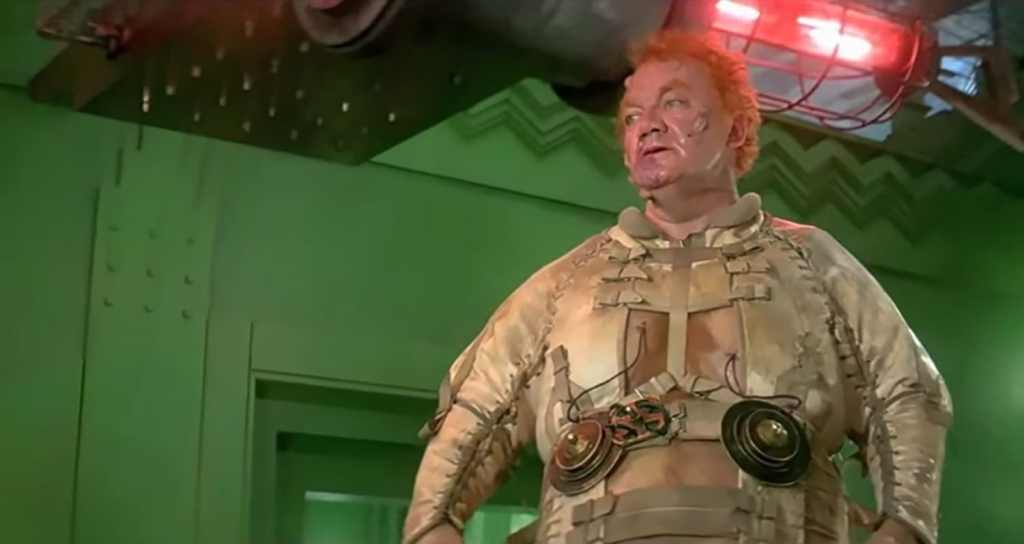
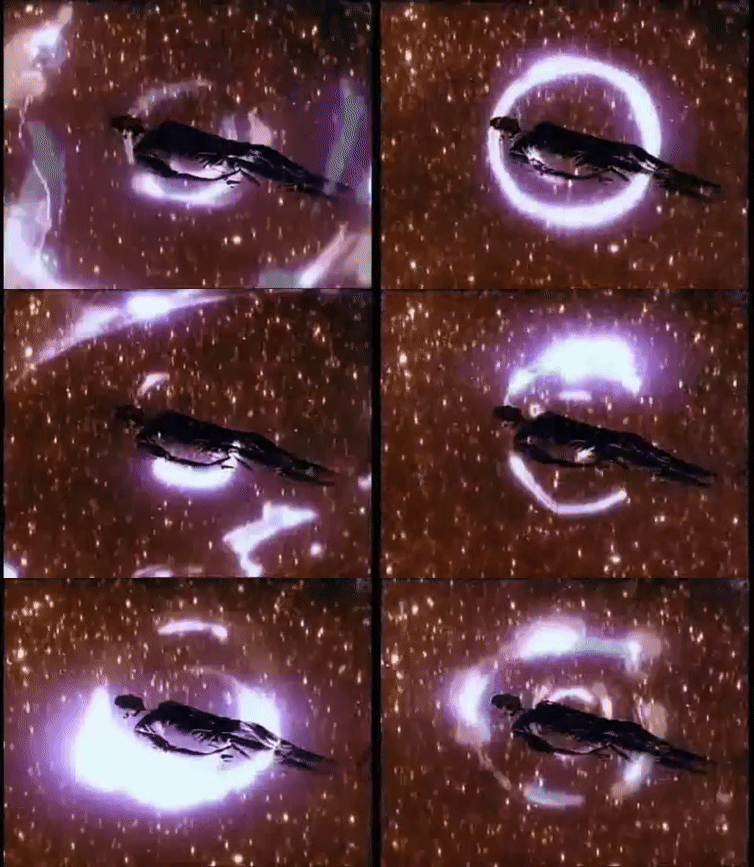
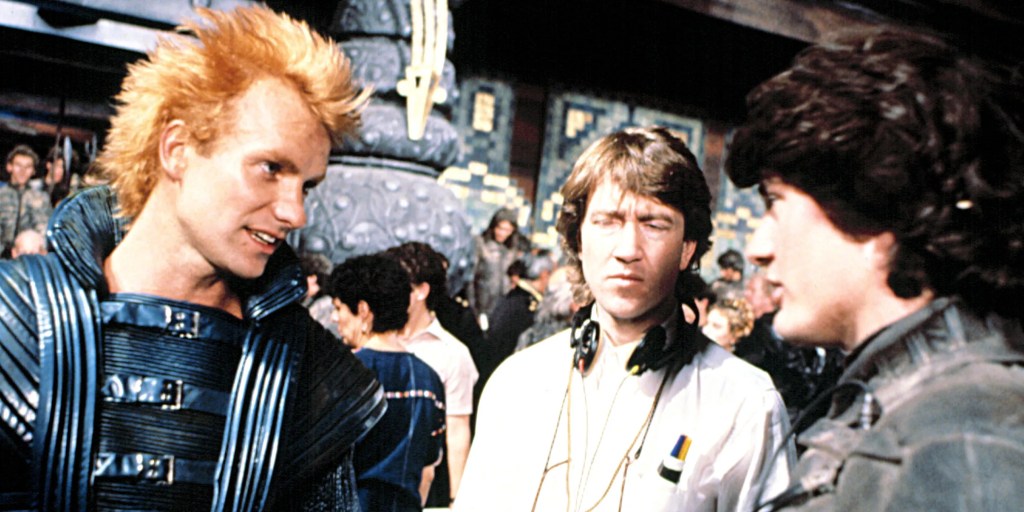
I can see the appeal of Dune as an abstract and metaphorical piece of art. I know it is a story about politics, prophecies and power, but David Lynch is also taking me on a journey of self-discovery. The Harkonnens are truly vile in this version of Dune, sexual and perverse and a reminder that evil will consume you from the inside out if you fall into its grasp. The Baron, Kenneth McMillan, overweight, infected and putrid represents a lifestyle of greed and debauchery. Feyd Rautha, Sting, the Baron’s nephew is also a reminder that this path is never fruitful and an example of how quickly the darkness can take you away. It is interesting to watch David Lynch’s fascination with the evil and horrors of the world. David’s soul seems bright, joyous and full of light. I guess that is his juxtaposition in life and one of his biggest attributes, taking us closer to the evil that haunts minds. I don’t see the Harkonnens as characters, I see them as choices. However, the difference between good and evil in Dune isn’t always easy to see. The noble House Atreides feels cursed from the beginning, as they take the first steps into a future that has already been decided. This is a Greek tragedy waiting to happen, which is hardly surprising when you learn more about Paul Atreides’ bloodline. David Lynch is also given a chance to go beyond the story structure, into a metaphysical space, with the water of life scene being one of my favourites from the movie. Paul must drink the water, the bile from a sandworm collected through the perspiration of the Reverend Mother’s skin which has killed many men that have tried it. Paul breaks down the lethal toxins allowing him to bridge space and time and see into the future. It is a beautiful sequence which represents the possibilities of this future landscape. However, it is also a reminder of the real value of this organic substance in our lifetime. The problem I face is distinguishing what was created by Herbert or Lynch as they work together perfectly. I think I will only truly understand when I have read the novels. Dune is a story rich in world-building, religion and the danger of corruption. In other words, it’s complicated and I can see why the studios kept away from it for so long. However, I am now ready to immerse myself in the written word and try to understand its intricacies.
This version of Dune is very reminiscent of the Heavy Metal of the eighties, perfect for any Iron Maiden album cover. I love the meticulous set designs that were all hand-built at Churubusco Studios in Mexico. The making of the movie was as epic as the story Frank Herbert created. There have been numerous attempts to bring Dune to the big screen and Jodorowsky’s Dune is a wonderful documentary that highlights just how difficult a production of this magnitude could be. The setbacks, tears and challenges faced by Dino De Laurentiis and his production company are legendary, a world beyond your experience, beyond your imagination. Dune required eighty sets built on sixteen sound stages, with a crew of seventeen hundred and twenty thousand extras. Health-related issues, failing electricity and a country with a declining infrastructure only added to the list of growing problems during filming. David Lynch was signed on to direct a sequel, but I don’t think anyone wanted to return to Mexico. You could spend a lot of time discussing why the film wasn’t as successful as it should have been, but I simply believe that Dune is a story that cannot be told in one movie alone. The final cut was taken away from David Lynch and the rest of this story is left for the history books. However, Lynch was given the chance to go and make Blue Velvet and it is reminiscent of Stanley Kubrick’s involvement with Spartacus. Sometimes, even the greats need a stepping stone to creative freedom. A movie like this will never be made the same way again, and its history is fascinating to me and I will never stop trying to learn new things about it. The soundtrack by TOTO, the perfectly selected cast and the issues with John Dykstra and his visual effects studio are among a vast of interesting stories that I enjoyed reading about in A Masterpiece in Disarray by Max Every and I would recommend the book to anyone who wants to learn more about the film and the film and its creation.

It is only now that I realise how much I am interested in the world of Dune. In my younger years, it was all about Star Wars and then it was music, partying and alcohol. However, I have always been interested in the book’s harvesting in popular culture. It is now intertwined into the social fabric of society, and I now want to understand the novels alone. The one scene that catches my imagination the most about this world is within this movie. As the Guild Navigator makes its way into the Emperor’s throne room, I know I should be worrying about the distribution of spice, but I am left wondering how a certain shade of black reminds me of some of the oldest railway stations in Liverpool, that are now hidden behind modern facades that hide their beauty. I know in my heart that I have David Lynch to thank for that. Funny, how a simple colour can change the course of somebody’s life. The sleeper has awakened!
Thank you for visiting today, it really is appreciated. If you enjoyed this review, please leave me a like or comment below. Also, if you would like to follow my journey on this site, please subscribe for future posts.
Dreaming with David Lynch.
Inside My Projects.
Make a one-time donation
Make a monthly donation
Make a yearly donation
Choose an amount
Or enter a custom amount
Your contribution is appreciated.
Your contribution is appreciated.
Your contribution is appreciated.
 Perhaps One Did Not Want To Be Loved So Much As To Be Understood.