

The Flesh, the World and the Devil is a 1959 American science fiction doomsday film. It was written and directed by Ranald MacDougall, distributed by Metro Goldwyn-Mayer, and failed to make back its 1.6 million dollar budget at the box office. I love a good dystopian movie. The end of civilization as we know it has always fascinated me, if only for the freedom each character finds in this new undiscovered landscape. Ralph Burton Harry Belafonte is a mine inspector who becomes trapped underground in a Pennsylvania coal mine. After five days of his fellow miner’s attempt to save him, the digging stops abruptly. Having no other option, Ralph finally claws his way back into society. Above ground, the anxiety Ralph endured inside the mine returns as the World lies still, devoid of any people, alive or dead. Our protagonist tries to work out what kind of event could create such devastation, he listens to a radio broadcast that states that an unknown Country has dispersed large quantities of radioactive sodium isotopes into the atmosphere. I’m pretty sure that such a thing could cause a lethal dust cloud that could wipe out every human being on the planet in under five days, right?

The World, the Flesh and the Devil is the most eye-catching film title I have found in my journey. I find it appealing and inviting, creating drama before you even lay your eyes on the screen. I was surprised to learn that the phrase comes from Christian theology. I cannot say that I am an avid reader of the Bible, but I do enjoy some of the poetry and prose depicted in the scriptures I have encountered. John of the Cross cites The World, the Flesh and the Devil as threats to the “perfection of the soul” and offers “different precautions” to be taken against those. The World is indifferent and in opposition to God’s design. The Flesh represents gluttony and sexual immorality. Finally, the Devil is the fallen angel, the father of lies whose relentless malice tries to drag us away from salvation.

Ralph heads to New York to search for survivors and finds the same desperate situation. Unable to locate anyone, he finally sets up a home in a department store and even invites a couple of mannequins around to keep him company. Lurking in the shadows is Sarah Inger Stevens, a woman in her early twenties. Unaware of the visitor outside, Ralph throws one of his friends out of a window in a fit of isolation and loneliness. Sarah mistakenly thinks that it is Ralph lying dead on the floor and lets out a scream. Once the couple both realise they are not alone, Ralph and Sarah strike up a strong friendship, but there is also something troubling the couple as they try to come to terms with this new World. Finally, Benson Thacker Mel Ferrer arrives on his boat and is almost dead, but he is nursed back to health by Ralph and Sarah.
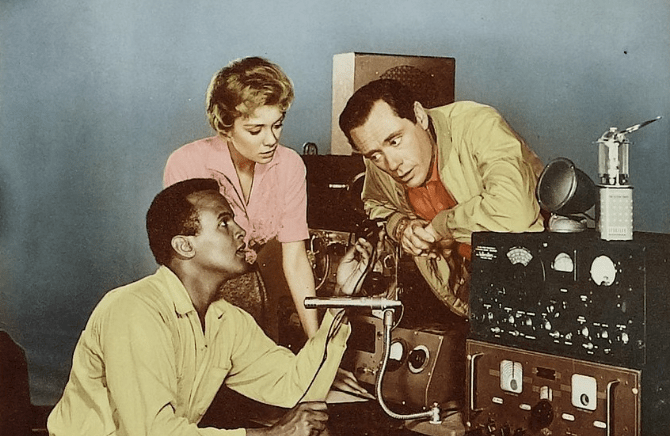
I always try to keep a positive mind about my reviews, because opinions can change over time. However, the science fiction in this movie is minimal. The microscope looks directly at the three individuals who suffer in this doomsday scenario. But, I also realise this is what science fiction is about, giving writers and filmmakers the platform to present themes that society is afraid to discuss. So, why did I not enjoy the film then? My main problem with the film is that the character development is confusing. It’s nothing more than three individuals making a complete mess out of every situation they face. Ralph is so busy trying to fight his demons that he’s unable to interact with those around him, and all I wanted was some background story. Sarah is confused by everything, and I don’t think this represents a strong female character, leaving her story to feel almost like a sitcom, which is a real shame to me. Benson simply decides to kill Ralph, so he can keep Sarah by his side. The problem is I’m not sure what the director was going for, and what the studio and audience were willing to accept in 1959. In reality, these characters shouldn’t have the time for all this interpersonal chaos. Maybe finding some rats to eat and keeping warm would be at the top of the agenda. Okay, maybe a slight exaggeration with the rats, but there is no desperation for these characters. It’s all too easy, running water and telephones for one and all. If you don’t believe in the characters and the situation, then what are you left with?

I felt like The World, the Flesh and the Devil could have made a solid statement with this film. I felt like it would have, because the cinematography is isolating, and you can feel the tension pulling at you. The score in moments is chilling and reminds me of a Hitchcock production in many ways. Almost immediately, it feels like the film turns into a comedy. Unfortunately, there is no tension between the characters, and the story doesn’t make much sense either. Ralph manages to contact other survivors across Europe. In reality, you understand that there is a chance to rebuild society. I feel conflicted about this film because maybe it’s the advancements in storytelling and filmmaking that make this film feel clumsy. Maybe, it’s my fault for expecting more from such a great title. I also understand this World, was vastly different from the one we live in today. Or is it? Whatever it is, I think the film had the chance to deliver something with a far greater message about society, and that’s a shame.
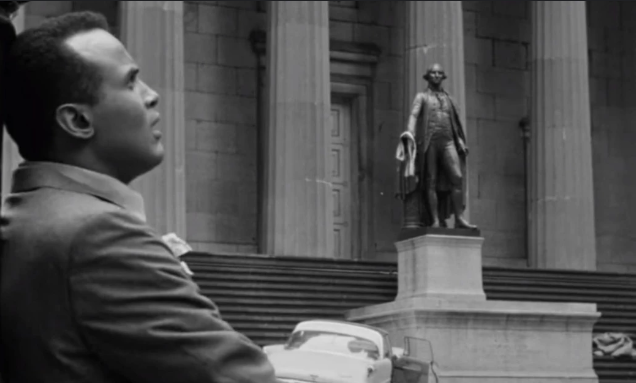
Benson searches the streets of New York with his hunting rifle to kill Ralph, but all this ends with Sarah accepting that the three of them can live in harmony. Leaving the trio to hop, skip and jump their way into the future, with no discussions, or tears and even less drama. I would say that the ending was comical, or should I say the beginning? I found this film difficult to talk about, but it also reminds me that it’s necessary to go back and look at the past. As always, I want to understand my place in the World and the lives of others. Judging by some of the reviews in the fifties, the critics shared some of my thoughts, which is satisfying. Maybe it’s the racism and sexism that I find difficult to discuss, but my personal choice is to treat people as individuals. But a story like this is set in a different time, with contrasting views, and I understand the significance of the film. It does make me think about some of the more important issues in today’s society and maybe that is enough.
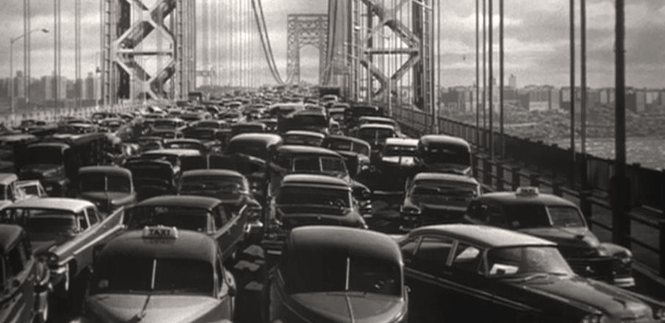
So, where will I go next in My journey into Science Fiction Part 30? The music for The World, the Flesh and the Devil was composed by Miklós Rózsa. The composer would also write the music for Time After Time, a science fiction film directed by Nicholas Meyer. I have noticed this film a few times now, and it has always caught my attention. And I’m glad to be visiting the movie, once and for all.
Thank you for visiting today, it really is appreciated. If you enjoyed this review, please leave me a like or comment below. Also, if you would like to follow my journey on this site, please subscribe for future posts.
My Journey into Science Fiction Archives.
My Projects.
Make a one-time donation
Make a monthly donation
Make a yearly donation
Choose an amount
Or enter a custom amount
Your contribution is appreciated.
Your contribution is appreciated.
Your contribution is appreciated.
 Perhaps One Did Not Want To Be Loved So Much As To Be Understood.